
Email Marketing for Beginners: A Complete Guide
 Rajesh
Email Marketing for Beginners: A No-Nonsense Guide (2026)
The Problem with Rented Land
Imagine spending two years building a massive following on social media. You post every day, you reply to comments, and your sales are directly tied to your page views. Then, one Tuesday morning, you wake up to find the algorithm has changed. Your reach drops by 90%, and your sales flatline.
I’ve seen this happen to so many businesses, and it hurts every time. That’s what happens when you build your business on rented land.
You don't own your social media followers. You don't own your search engine rankings. But you do own your email list. If you want a predictable, stress-free way to reach your audience and drive sales, email is still the absolute king.
If you’re feeling overwhelmed by all the marketing advice out there, take a breath. In this guide, we are going to break down email marketing for beginners. No jargon. No complicated software setups. Just what you need to know to hit "send" with confidence.
What Exactly is Email Marketing Today?
Forget the old idea of email marketing. It’s not about blasting annoying promotional flyers to thousands of strangers with a flashy "BUY NOW!" subject line.
Today, email marketing is simply about building relationships at scale. It’s a way to send helpful advice, business updates, or carefully researched pitches directly to a person's inbox. When done right, it feels like a one-on-one conversation between you and the reader.
Why You Need an Email List (Even if You Hate Newsletters)
People check their email obsessively. Think about your own habits—you probably check your inbox before you even get out of bed.
Here’s why putting your business inside that inbox matters:
The 3 Main Types of Email Marketing
You don't have to be a master copywriter to succeed. You just need to pick the right strategy for your current goals.
This is what most people think of. Someone visits your website, likes your stuff, and hands over their email address to stay in touch. In return, you send them weekly or monthly updates, tips, and occasional product offers. The goal here is long-term trust.
This is where email gets almost magical. Let's say a customer puts an item in their cart on your website but forgets to buy it. You can set up a system that automatically emails them two hours later saying, "Hey, did you forget this?" It runs in the background while you sleep.
If you sell to other businesses (B2B), you probably don't have time to wait for people to find your website. Instead, you actively find the email addresses of potential clients and send them a personal pitch. Because they don't know you yet, the rules for cold email are much stricter, but the payouts are massive.
Step-by-Step: How to Launch Your First Campaign
Ready to get your hands dirty? Here is a simple playbook to get your first campaign out the door.
Figure out what you want to achieve
Don't just email people to say "hi." Do you want them to read a new blog post? Book a sales call? Buy a discounted product? Pick one single goal.
Get your contacts together
If you are running an inbound newsletter, pull the list of people who signed up on your site. If you are doing cold outreach, you'll need to find your prospects. If you're stuck on this step, tools like the RS Lead Extractor Ultimate can help you pull targeted business contacts from directories so you aren't starting with an empty spreadsheet.
Clean that list
I’ll explain this more in a second, but do not skip this. Make sure the emails on your list are real and active.
Write a subject line that sparks curiosity
Keep it short. If your subject line looks like an ad, people will delete it. Write it like you are sending a note to a coworker. For example, instead of "Huge 50% Off Sale on Software!" try something simple like, "Question about your software stack."
Write like a human
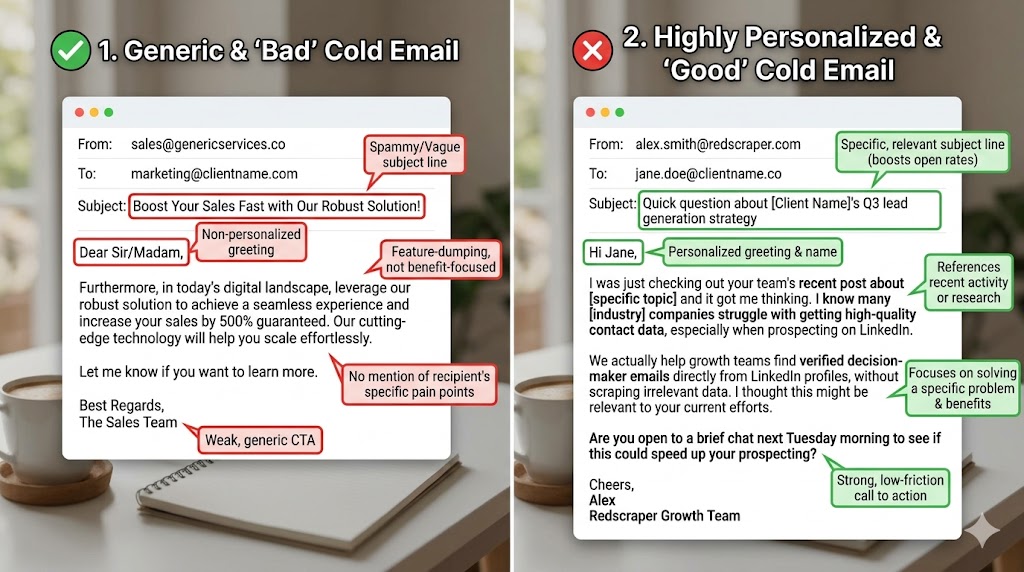
Keep your paragraphs super short. Use bullet points. Cut out the corporate jargon. If you wouldn't say a sentence out loud to a friend over coffee, don't put it in your email.
The Golden Rule: Never Skip List Cleaning
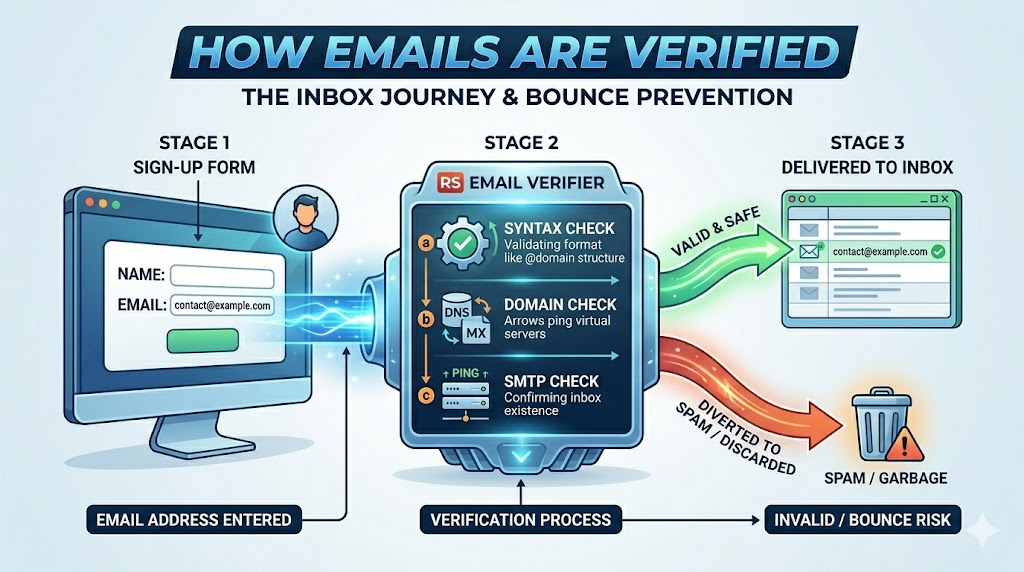
If there is only one thing you remember from this guide, make it this: Bad data will ruin you.
I’ve seen so many smart founders write beautiful emails, only to send them to a list full of typos, fake addresses, and people who quit their jobs three years ago. When you send emails to dead addresses, the message "bounces" back.
Email providers (like Gmail and Outlook) track this. If you have a high bounce rate, they assume you are a spammer. Eventually, even the emails you send to real, happy customers will get shoved into the spam folder.
Before you ever hit "send" on a campaign, run your spreadsheet through a tool like the RS Email Verifier. It checks every address behind the scenes to make sure it's real, keeping your bounce rate near zero and protecting your reputation.
3 Rookie Mistakes to Avoid
Buying cheap lists
Never buy a spreadsheet of "10,000 CEOs" from a sketchy website. It’s full of spam traps and will get your email account blocked within a week.
Talking about yourself too much
Your readers care about their own problems, not your company's latest award. Frame everything around how you can help them.
Forgetting the Call to Action (CTA)
Tell people exactly what to do next. Say "Click here to read the post" or "Reply 'Yes' if you want a sample." Don't leave them guessing.
FAQs About Email Marketing for Beginners
Quick Answer
To start email marketing, first decide if you want to send a regular newsletter or cold sales pitches. Gather your contacts, clean your list using an email verifier to prevent bounces, and write short, conversational emails with one clear call to action.
Q: Do I need expensive software to start?
A: Not at all. There are plenty of free or cheap tools available for sending basic newsletters. Spend your budget on ensuring your data is clean first.
Q: Will people get mad if I email them?
A: If you send garbage, yes. But if you send genuinely helpful advice, solve a problem they have, or make them smile, they will look forward to seeing your name in their inbox.
Q: How long should my emails be?
A: As short as possible while still getting the point across. Most people skim emails on their phones while waiting in line for coffee. Make it easy for them.
Final Thoughts
Getting started with email marketing feels intimidating because there are a million metrics you could track. But you don't need to overcomplicate it.
Start by finding a good group of people to talk to. Run their emails through a verifier so you don't hit spam filters. Then, just write to them like you’d write to a friend who needs your professional advice. Once you get a taste of having direct, unfiltered access to your audience, you'll wonder why you spent so much time stressing over social media algorithms.